Exploring Marine Genetic Footprints: eDNA Sampling in Damer Island
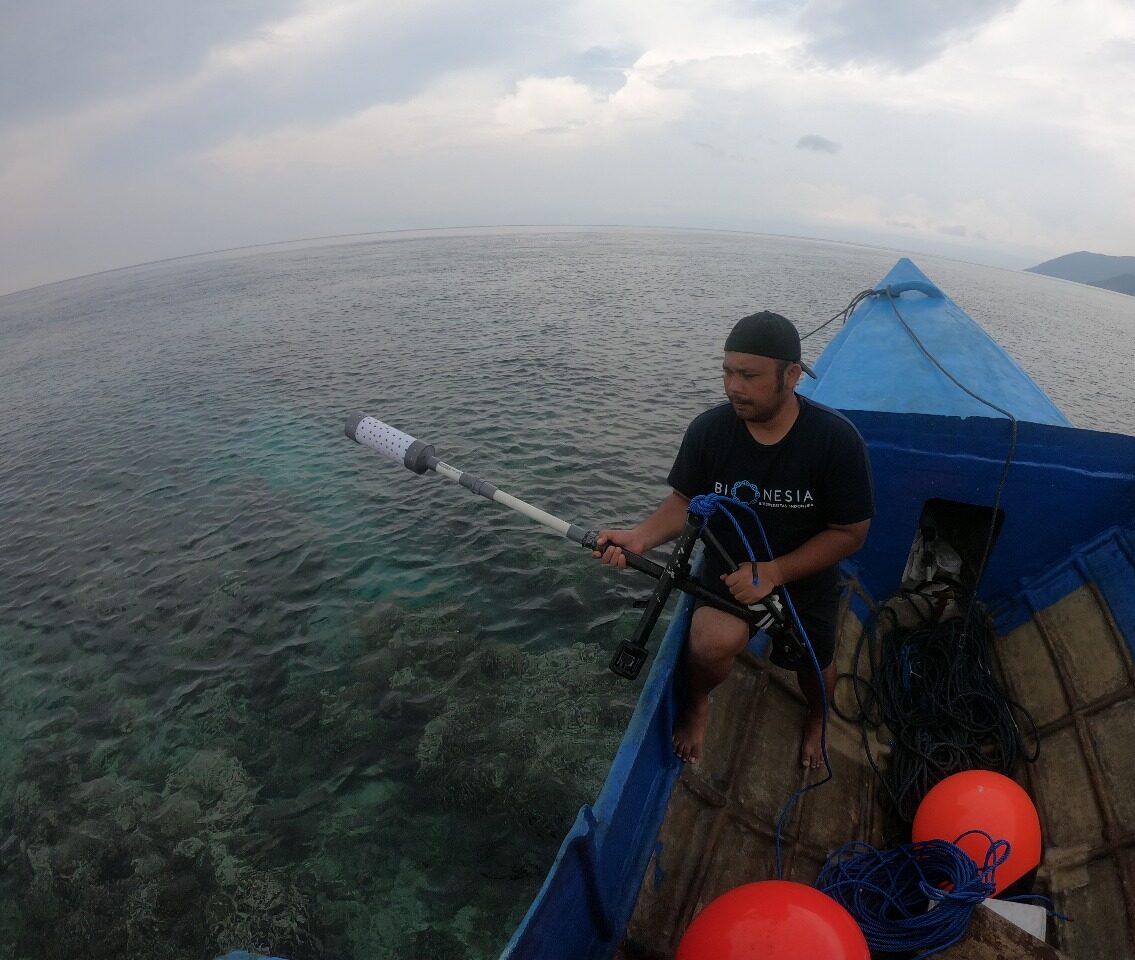
In April and May 2024, the research team from Yayasan Biodiversitas Indonesia (BIONESIA), together with WWF Indonesia, conducted marine biodiversity exploration through environmental DNA (eDNA) sampling in the waters surrounding Damer Island, Southwest Maluku Regency, Maluku Province. This activity aimed to non-invasively detect the presence and distribution of marine species as part of molecular technology-based biodiversity mapping efforts.
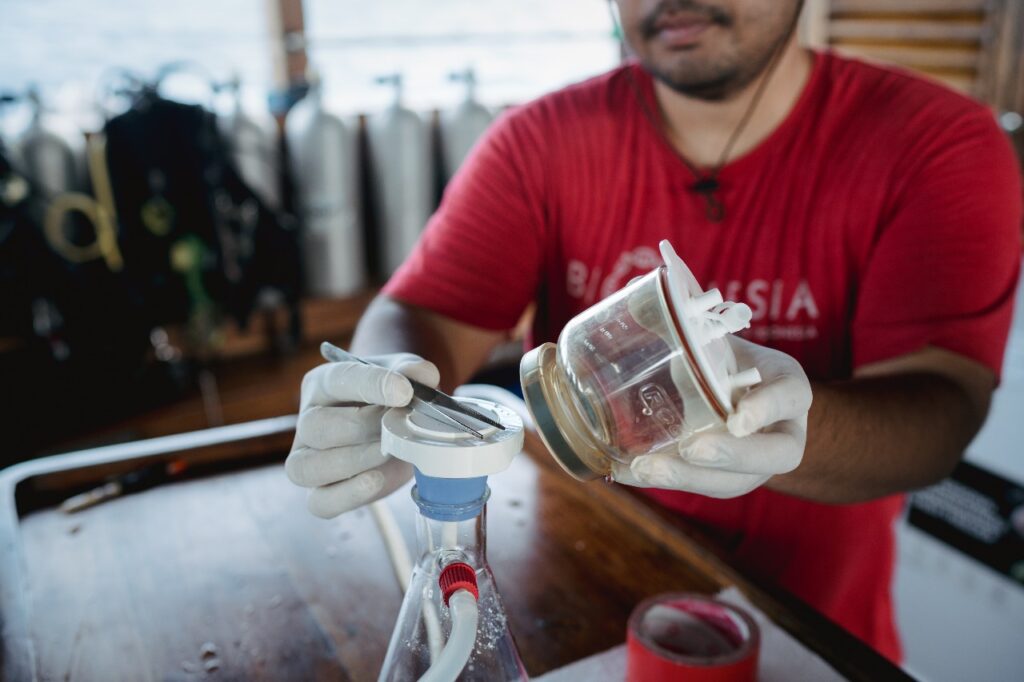
The eDNA method is an innovative approach that utilizes genetic material released by organisms into the aquatic environment, whether in the form of mucus, excretions, shed skin, or dead cells. DNA suspended in the water is then filtered, extracted, and analyzed using molecular biology techniques such as PCR and barcoding to identify species taxonomy. The strength of this method is its high sensitivity, ability to detect rare or cryptic species, and its non-destructive nature, causing minimal disturbance to natural ecosystems.
Sampling was carried out at several points representing various coastal ecosystems, such as coral reefs, seagrass beds, and shallow rocky waters. At each site, seawater was collected in specific volumes using sterile containers, then filtered with micro-porous membrane filters to capture DNA particles. The filters containing eDNA were stored at low temperatures with lysis buffer to maintain DNA stability until further laboratory analysis.
This activity was designed to obtain baseline data on the marine biodiversity of Damer Island while testing the effectiveness of the eDNA method for species diversity surveys in remote areas. The resulting data are expected to be used to:
- Compile a list of marine species detected around Damer Island.
- Assess indicators of coastal ecosystem health.
- Provide baseline information for sustainable marine conservation and resource management planning.
- Enable early detection of invasive species or protected species, making eDNA a potential tool for long-term ecological monitoring.
As part of a participatory approach, the activity also involved local communities in field documentation and the dissemination of the eDNA method. Education was carried out through open discussions on the importance of science-based conservation and the role of communities in protecting coastal ecosystems.
Through this initiative, it is expected that collective awareness will be fostered on the importance of documenting marine biodiversity and utilizing genetic technologies as a foundation for evidence-based conservation policies. By combining molecular approaches with local engagement, eDNA sampling in Damer Island represents an initial step toward more precise, accurate, and sustainable management of marine biodiversity.