4th Indonesia Sharks and Rays Symposium
Indonesia is one of the countries with the greatest diversity of sharks and rays in the world, with more than 200 recorded species. It is also the largest consumer and trader of sharks and rays globally, with shark fin exports reaching 484 tons in 2019. At the same time, Indonesia has shown strong commitment to protecting and conserving sharks and rays through various policies and initiatives, such as the establishment of shark and ray conservation areas, granting protected status to several species, and ratifying international conventions on endangered species trade (CITES).
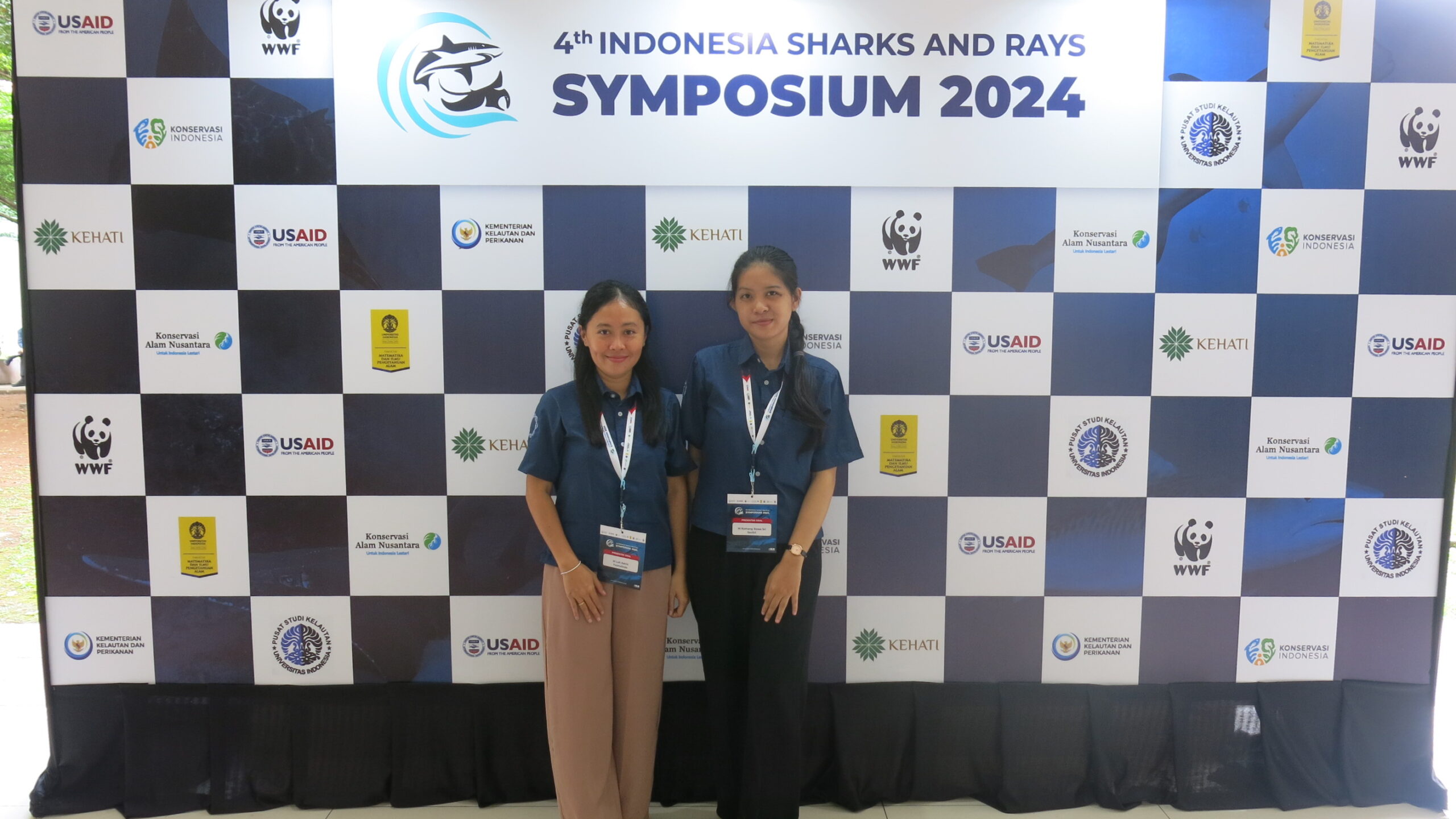
On May 21–22, 2024, the 4th Sharks and Rays Symposium was held at the University of Indonesia, Depok. This symposium focused on exploring critical habitats, developing mitigation strategies, implementing population recovery efforts, assessing conservation status, and addressing human dimensions related to shark and ray conservation challenges. The objectives were to:
- Identify and understand critical habitats for sharks and rays in Indonesian waters.
- Discuss current challenges in shark and ray management and formulate mitigation strategies.
- Develop population recovery measures for sharks and rays.
- Consider human dimensions in the management and conservation of sharks and rays.
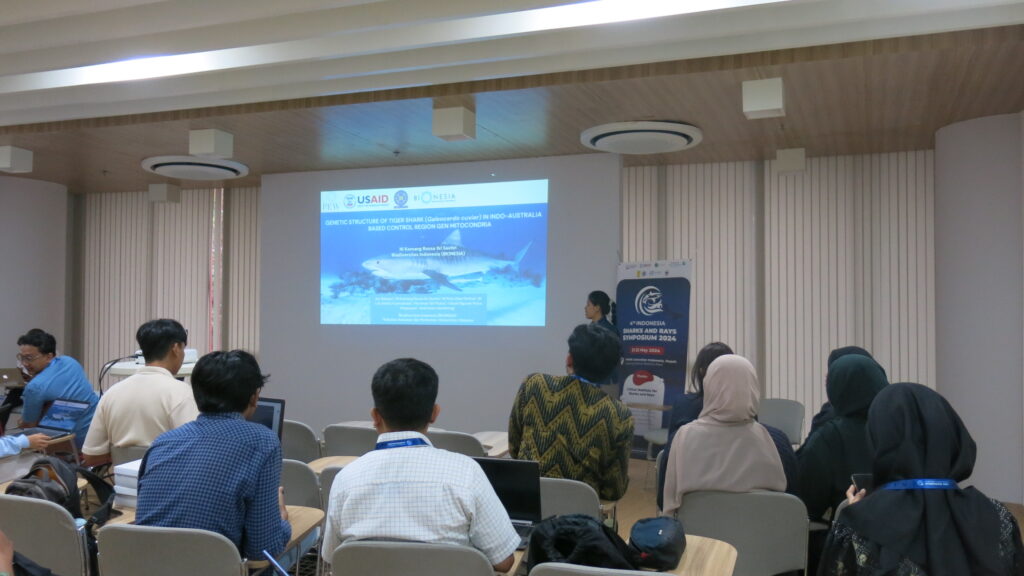
The BIONESIA team participated by delivering scientific presentations on the following topics: Genetic Structure of the Silky Shark (Carcharhinus falciformis) in Indonesia and the Timor Sea, Population Genetic Structure of the Tiger Shark (Galeocerdo cuvier) in the Indo-Australian Region Based on Mitochondrial Control Region Genes, and Species Identification of Sharks in Fresh Shark Products Sold at Benoa Port, Bali, Using DNA Barcoding.
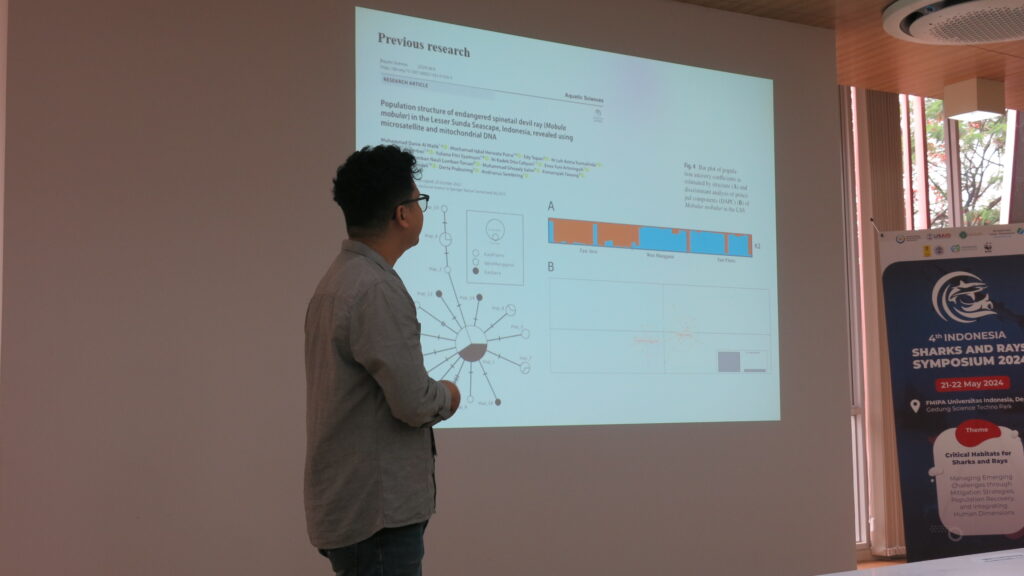
This event formed part of the ongoing effort to strengthen scientific networks and shark and ray conservation practices, recognizing the crucial ecological role of these species as apex predators while also addressing the high exploitation pressures they face. Over the course of two days, the symposium featured sessions including scientific posters, oral presentations, and panel discussions that covered key themes such as identifying and protecting critical habitats for sharks and rays, finding innovative approaches to address threats, and advancing population recovery strategies.
Additionally, the symposium highlighted the urgent need to assess the conservation status of sharks and rays while integrating human dimensions by examining socio-economic aspects tied to their conservation. The event also served as a platform for launching and disseminating recent research findings, including the application of modern technologies such as environmental DNA (eDNA), spatial modeling, and tagging technologies for tracking individual movements.
Participants included representatives from various institutions: structural officials from the Ministry of Marine Affairs and Fisheries, local government representatives from shark and ray migration areas, fisheries practitioners, researchers and academics, and students, as well as members of the public concerned with shark and ray conservation.
Through this symposium, it is expected that stronger synergy will be built among researchers and stakeholders in formulating more adaptive and science-based strategies for shark and ray conservation. Moreover, the symposium emphasized the importance of youth and student involvement in shaping the future of sustainable marine conservation in Indonesia.